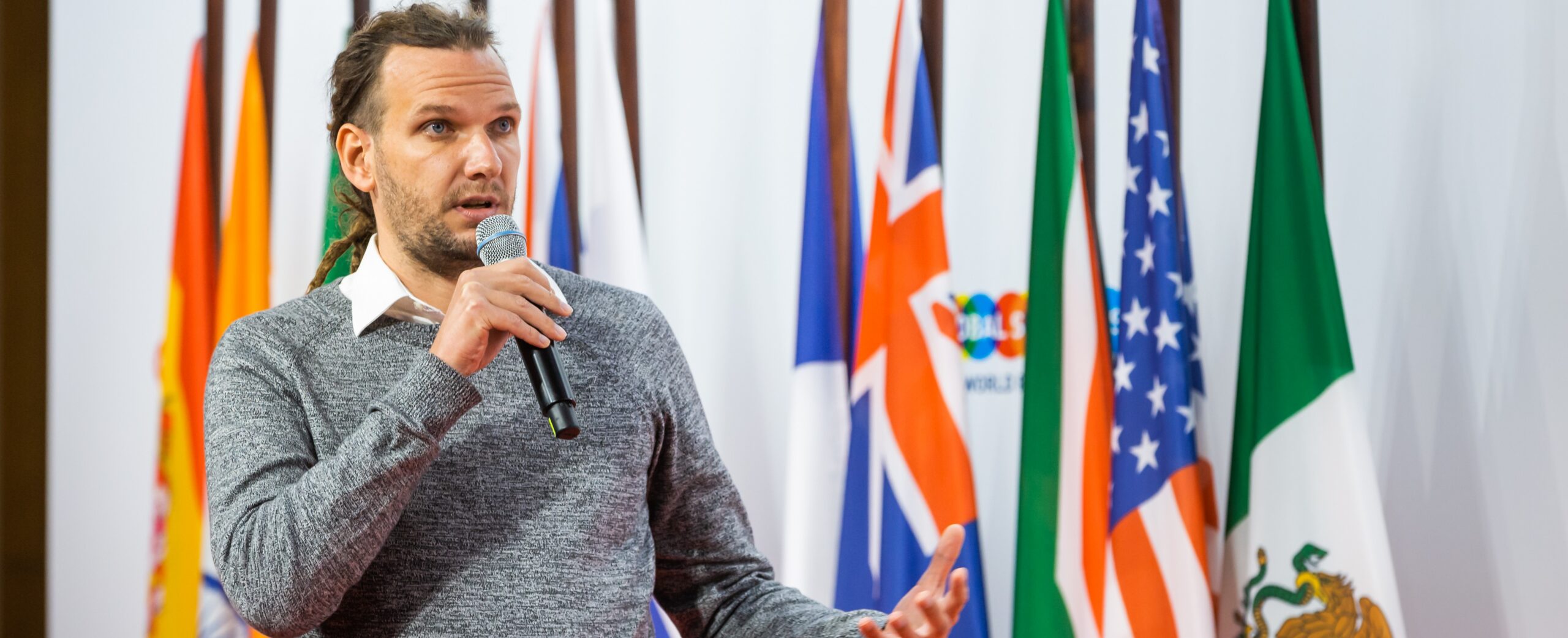
I am the founder of SINA (Social Innovation Academy), a lecturer and a facilitator. My work centres on a question we keep testing in practice: what becomes possible when people who have been treated as recipients of help have the freedom and responsibility to shape what happens to them?
Uganda and Germany are both home to me. I grew up in Berlin, but much of what I understand about education and leadership comes from building SINA with people in Uganda.
How it began
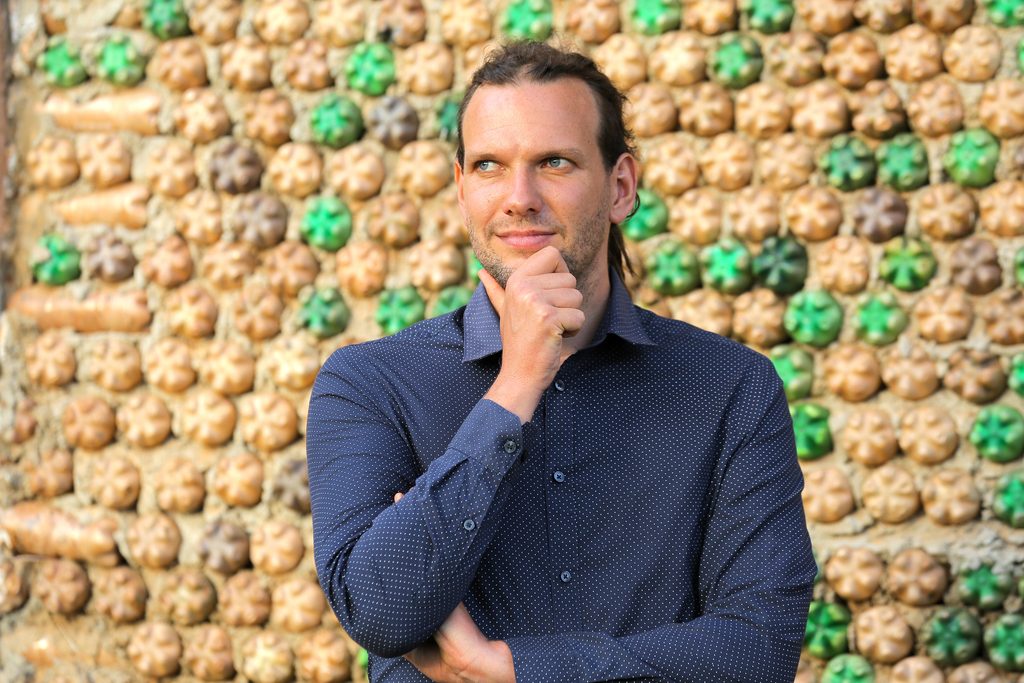
In 2006, I went to Uganda to volunteer at Kankobe Children’s Home. When the children I was living with could not afford to continue their education, I helped establish a sponsorship programme. In 2009, I founded Jangu e.V. in Germany to support that work. We paid school fees and hoped that education would open doors but when the first generation finished secondary school, most had no access to employment or further studies.
That forced us to question our approach. Getting someone through school was not the same as creating a path to an independent life. SINA grew out of that question. In 2014, we began building our first SINA Community in Mpigi, Uganda. Young people took responsibility for the place themselves and developed the skills to create social enterprises around challenges they understood firsthand.
The leadership we foster
In many aid and education systems, young people from difficult backgrounds are still treated as beneficiaries to be helped. Decisions are made for them and money is controlled somewhere else. Their realities are discussed in rooms they are not part of. SINA exists to interrupt that pattern.
Across SINA Communities, young people take real roles and co-run their communities. They do not learn about responsibility from a distance. They practice it. Sometimes this is uncomfortable. A SINA member may make a decision that others would not have made. It may create tension. It may turn out to be a mistake. In those moments, leadership is not about taking control back. It is about making the information visible enough for responsibility to grow.
Trust is not the absence of boundaries. Harm needs intervention. Money needs accountability. In SINA, young people are trusted with responsibility before they feel fully ready for it. This is how they grow.
We call this principle freesponsibility. Freedom and responsibility are inseparable. When someone is given real freedom in a role, they also carry responsibility for what happens next.
What this asks of me
If every important decision still needs to come back to one founder, one manager, or one office, then the SINA Framework has not gone far enough. SINA is increasingly held by the people and communities living it. They will do things differently. That is the point. I remain involved in SINA’s development, strategy and partnerships. I also help connect organizations with the experience that now exists across the ecosystem. Through the SINA Expert Network, that experience can reach others without every engagement depending on a personal connection to me.
Today, we are a growing ecosystem of 24 SINA Communities across 10 countries. Scholars have created around 160 social enterprises and over 2,000 jobs. About 1,000 of us are currently shaping SINA every day by holding roles, making decisions, repairing what breaks, and creating solutions from problems we know closely.
Teaching and learning
I bring these questions into my teaching at ESCP Business School in Berlin and the Management Center Innsbruck (MCI), and into talks and facilitated sessions with organizations.
How do we distribute authority without losing accountability? What changes when people learn through responsibility instead of waiting to be declared ready? These are questions we have had to work through at SINA. I share what we have learned, including where the practice is difficult and where we are still finding our way.
My academic background includes a bachelor’s degree in Non-profit, Social & Healthcare Management from MCI and a master’s degree in Peace, Development, Security and International Conflict Transformation from the University of Innsbruck. I also studied at the University for Peace in Costa Rica.
For speaking, teaching or interview enquiries, tell me what you have in mind.
To explore the Communities and people behind this work, visit SINA.